• Home
  • IMMAs
    • IMMA Selection Criteria
    • IMMA Identification Process
    • IMMA definitions
    • FAQ on IMMAs
    • IMMA citations
    • Regional IMMA workshops
      • Mediterranean Sea
      • Pacific Islands
      • North East Indian Ocean and South East Asian Seas
      • Extended Southern Ocean
      • Western Indian Ocean and Arabian Seas
      • Australia-New Zealand and South East Indian Ocean
      • Black Sea, Turkish Straits System and Caspian Sea
      • South East Tropical and Temperate Pacific Ocean
      • South West Atlantic Ocean Region
      • North East Atlantic Ocean Region
      • North West Atlantic Ocean and Wider Caribbean
    • Current IMMAs Summary
    • IMMAs Searchable Database
    • IMMAs Description and Fact Sheets
    • IMMA Spatial Layer Download
    • Regional Groups
    • How can IMMAs be used?
  • IMMA e-Atlas
  • IMMA Specialist Group
    • Mission
    • Task Force Members
    • Supporting organisations
    • Partner organisations
    • Activities
      • Panorama Solutions
      • Geospatial Genetics to Identify IMMAs
      • Geospatial Analysis of Threats
    • ICMMPA
  • Resources
    • Documents
    • IMMA Handbook
    • IMMA citations guidance
    • IMMA Spatial Layer Download
    • IMMA – Area Submission
  • Contacts
  • News
  • Menu Menu

Critical Habitat for monk seals giving birth in Cyprus shows value of IMMAs

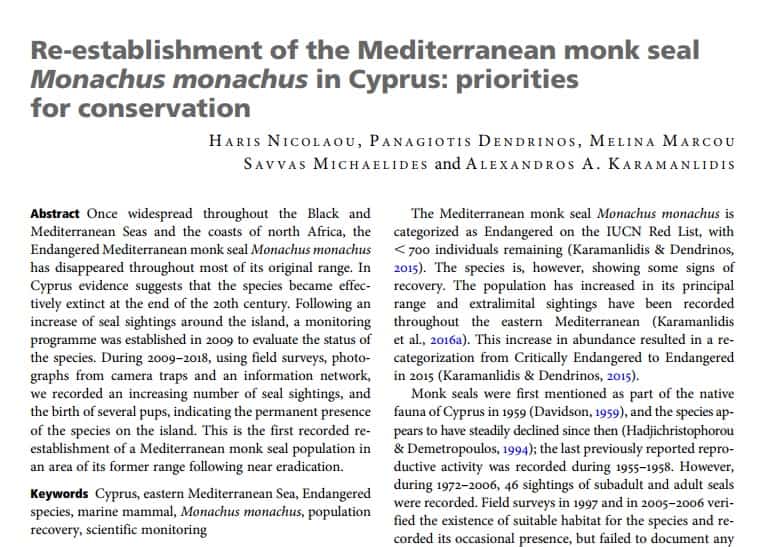
Recent research published on the journal Oryx (2019, doi:10.1017/S0030605319000759) indicates that the Endangered Mediterranean monk seal Monachus monachus is becoming established again in Cyprus, with an increasing number of sightings and even the births of several pups.
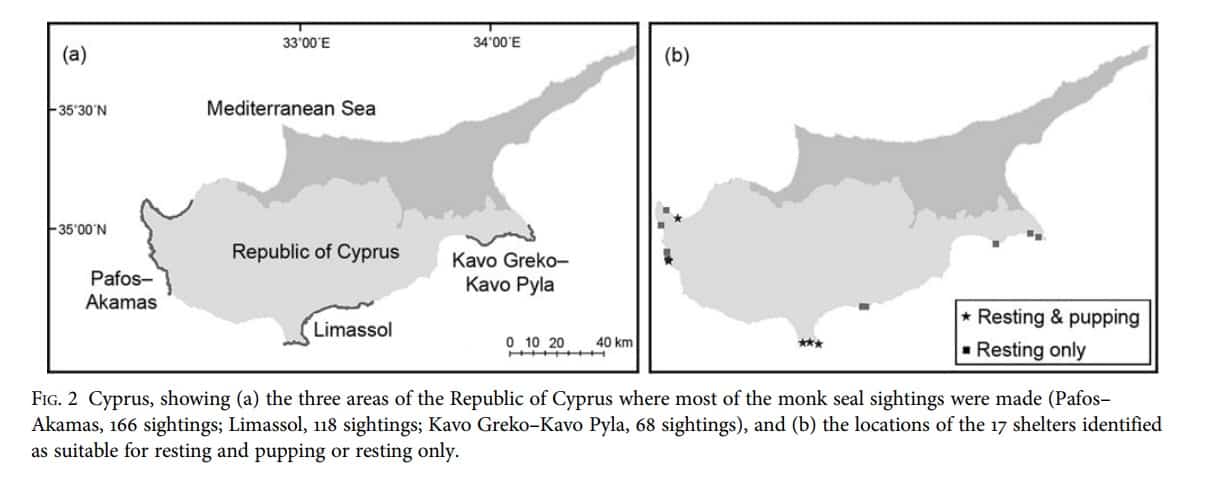
Monk seal sightings (left) and the presence of suitable caves for resting and pupping (right) are shown in the map above, taken from the Oryx paper.
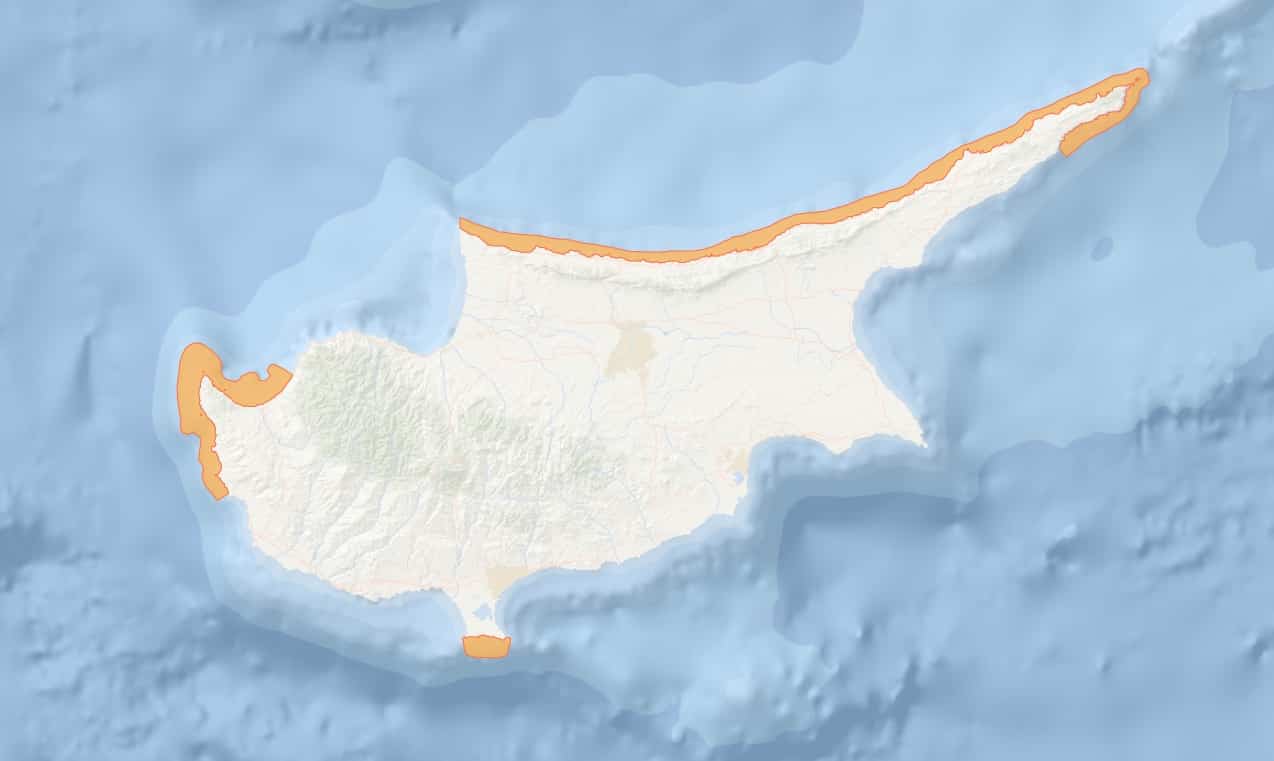
Monk seal sightings and births were recorded largely within the “Akamas and Chrysochou Bay IMMA” and the “Akrotiri IMMA”, as shown in the above screenshot of the IMMA e-Atlas. This indicates that the two IMMAs were identified correctly even before the evidence of their current importance had become available.

The number of sightings in the Kavo Greko – Kavo Pyla area, in the south-east of Cyprus, likely warrants the proposal of a new Area of Interest (AoI), to be considered a candidate IMMA (cIMMA) as new opportunities arise.


Categories

Older news

Privacy Policy Cookie Policy
This website runs on green hosting - verified by thegreenwebfoundation.org

Partners

IUCN World Commission on Protected Areas (WCPA)
IUCN Species Survival Commission (SSC)
International Committee on Marine Mammal Protected Areas (ICMMPA)
Tethys Research Institute
Whale and Dolphin Conservation (WDC)
Global Ocean Biodiversity Initiative (GOBI)
Office français de la biodiversité

Follow us

@copyright 2016-2020 - Marine Mammal Protected Areas Task Force - Web Design: Elena Politi - Graphic: Massimo Demma
Link to: Important Marine Mammal Areas featured at the World Marine Mammal Conference Link to: Important Marine Mammal Areas featured at the World Marine Mammal Conference Important Marine Mammal Areas featured at the World Marine Mammal Conferenc... Link to: Forty five candidate IMMAs identified around Australia and New Zealand Link to: Forty five candidate IMMAs identified around Australia and New Zealand Forty five candidate IMMAs identified around Australia and New Zealand
Scroll to top

Loading...